Canva Frame Editable Fish Frame for Creative Projects
Digital design often feels like a balancing act between artistic freedom and technical limitations. Many creators struggle to find assets that are both visually striking and easy to manipulate without advanced software skills. This is where the Canva Frame Editable Fish Frame changes the workflow entirely. It transforms a standard image container into a dynamic tool that adapts to your specific vision, whether you are designing a birthday invitation or a corporate marketing asset.
The core value of this resource lies in its simplicity. By allowing users to drag and drop pictures, patterns, and digital paper images directly into a pre-defined shape, it removes the need for complex masking tools or manual cropping. The result is a seamless integration of content that looks professional but requires minimal effort to achieve. This accessibility makes it a vital component for anyone looking to elevate their visual storytelling without getting bogged down in technical hurdles.
Understanding the Tool and Its Versatility
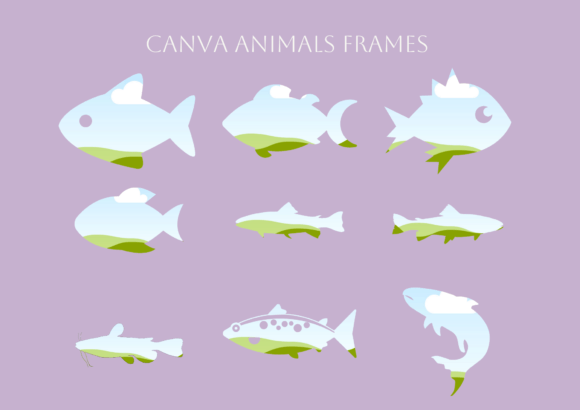
At its heart, a frame in Canva acts as a boundary that dictates how an image appears. The Canva Animals Frame Canva Custom Frame collection takes this concept further by offering specialized shapes, such as the fish frame, which adds a thematic element to any project. Unlike generic squares or circles, these unique shapes tell a story immediately. A fish frame suggests aquatic themes, marine life, summer vacations, or even educational content about ocean biology.
The "editable" aspect is crucial. It means the frame itself is not a static image file that you cannot change. Instead, it is a functional layer within the Canva editor. When you place an image inside, the software automatically crops and fits the photo to the contours of the fish shape. You can swap the image instantly, adjust the position, or change the background color of the frame without losing the original shape's integrity. This flexibility is what separates a basic template from a powerful design asset.
Why Different Audiences Care About This Feature
While the mechanics of the tool remain the same, the reasons people use it vary significantly depending on their goals. For some, it is about speed; for others, it is about precision or creative expression. Understanding these different perspectives helps clarify why this resource is so widely adopted across various sectors.
Beginners and Hobbyists
For those new to graphic design, the fear of making mistakes is common. Beginners often avoid using frames because they worry about ruining their photos or creating awkward edges. The simple drag-and-drop functionality of the Canva Fish Frame Simple eliminates this anxiety. A hobbyist planning a family vacation scrapbook can simply upload their best beach photos and drop them into the frame. If the photo doesn't look right, they can move it slightly until it fits perfectly. There is no learning curve regarding masking layers or clipping paths. This ease of use encourages experimentation, allowing users to focus on creativity rather than technical execution.
Educators and Content Creators
Teachers and bloggers often need to create engaging materials quickly. An educator teaching a unit on marine ecosystems needs visuals that capture students' attention. Using a fish frame to display information about different species makes the slide deck or handout more interesting than a standard rectangular photo. Similarly, a blogger writing about healthy eating might use the frame to highlight recipes or ingredients. The priority here is clarity and engagement. The frame serves as a visual anchor that guides the reader's eye, making the content more digestible and memorable.
Small Business Owners and Marketers
For entrepreneurs, time is money. A small business owner running a local pet shop or a seafood restaurant needs consistent branding across social media platforms. They do not have hours to spend editing images in Photoshop. The ability to use a ZIP file containing instructions and templates allows them to maintain a high standard of quality with minimal investment. They can create a series of promotional posts featuring their products inside the fish frame, ensuring brand consistency. The cost-effectiveness is also a major factor; since this works in both the free and Pro versions of Canva, businesses can scale their design efforts without incurring additional software costs.
Practical Workflow and Implementation
Integrating these frames into your projects is designed to be intuitive, requiring only a few steps to get started. The process begins with acquiring the necessary files. Typically, a download includes a ZIP file that contains a PDF guide and the actual frame elements. Once you have the file, the workflow becomes straightforward.
- Upload the Resource: First, upload the PDF file provided in the package to your Canva account. You will find this file in your "Projects" folder. This step ensures you have the reference material and the editable frames ready to go.
- Select and Copy: Open your Canva design or start a new file. Locate the specific frame you want to use, such as the fish shape. Click on it to select it, then hit CTRL C (or Command C on Mac) to copy the frame to your clipboard.
- Paste and Customize: Navigate to the area of your design where you want the image to appear. Hit CTRL V (or Command V) to paste the frame. Finally, drag and drop your desired image, pattern, or digital paper directly into the frame. The image will snap into place, perfectly cropped to the shape.
This method bypasses the need to search for complex tutorials on how to mask images manually. It streamlines the creation process, allowing designers to produce multiple variations of a design in minutes. Whether you are creating a collage for a personal blog or a flyer for a community event, this workflow ensures reliability and speed.
Evaluating Quality and Long-Term Usefulness
When selecting design assets, professionals often prioritize quality and longevity. The Canva Frame Editable Fish Frame offers a solution that stands the test of time. Because it is built on the robust platform of Canva, the frames remain compatible with future updates to the software. Users do not need to worry about file formats becoming obsolete.
The quality of the output is another critical factor. Since the frames are vector-based or high-resolution compatible, they maintain sharpness when resized for different mediums, from mobile screens to large print banners. This versatility ensures that the investment of time spent creating the design pays off across multiple channels. Furthermore, the ability to use patterns and digital papers within the frame opens up endless possibilities for texture and depth, adding a layer of sophistication that plain images often lack.
Ultimately, the decision to use this tool comes down to matching your current needs with the capabilities of the asset. If you require a fast, reliable way to present images in a thematic format without compromising on quality, this frame is an excellent choice. It bridges the gap between amateur enthusiasm and professional polish, empowering users at every skill level to produce stunning visual content. By simplifying the technical aspects of design, it allows the true message of your work to shine through, making it a valuable addition to any creator's toolkit.