Tropical Fish Watercolor Clipart
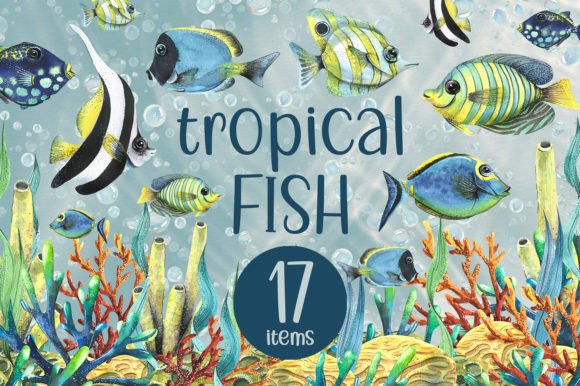
In the landscape of digital design, finding assets that balance artistic authenticity with technical efficiency is often a challenge. Tropical Fish Watercolor Clipart addresses this by offering hand-drawn illustrations that have been carefully digitized to serve modern workflows. This collection features bright, colorful tropical fish interacting with corals, algae, and sea sponges, all set against water wave motifs. Unlike generic vector graphics that can feel sterile, these watercolor elements bring a soft, organic texture to projects while maintaining the crispness required for high-quality printing.
The true value of this asset lies in its versatility and how it integrates into various stages of a creative process. Whether you are a marketer designing a brochure for a tourist destination, an educator creating learning materials for children, or a small business owner developing product packaging, these isolated elements provide a flexible foundation. The collection is part of a larger ecosystem that includes pre-made compositions, templates, seamless borders, and patterns, allowing designers to scale their output without sacrificing consistency.
Integrating Assets into the Creative Workflow
Effective design is rarely about the final image alone; it is about how that image fits into the broader production pipeline. When working with Tropical Fish Watercolor Clipart, the workflow begins before the first stroke is made on a canvas. Understanding the file structure is crucial for efficiency. The ZIP archive contains 17 isolated elements available in both JPG and PSD layered formats. Having access to layered PSD files is a significant advantage for professionals who need to adjust opacity, blend modes, or recolor specific parts of the illustration without losing quality.
Before diving into a project, it is helpful to organize these assets logically. Since the collection includes individual components like a single sponge, a specific coral branch, or an isolated fish, you can treat them as modular building blocks rather than static images. For instance, if you are designing a series of social media posts for a summer campaign, you might use the same fish element but place it against different background colors or combine it with different algae textures. This modularity supports rapid prototyping and allows for A/B testing of visual styles within the same thematic framework.
Pre-Production Planning and Concept Development
During the planning phase, having a library of high-quality, pre-existing illustrations can accelerate the mood board creation process. Instead of sketching rough ideas from scratch, designers can pull directly from the Tropical Fish Watercolor Clipart set to visualize concepts. The bright colors and cute aesthetic of the fish help convey a "wow" effect immediately, which is essential when pitching ideas to clients or stakeholders who need to grasp the emotional tone of a project quickly.
This preparation stage also involves checking compatibility. Because the illustrations are digitized efficiently, they work well across various platforms, from desktop publishing software to web design tools. However, it is important to remember that the font and background slides seen in product previews are not included in the download. You must source your own typography and layout backgrounds to complete the composition. This separation ensures that your final design remains unique and tailored to your brand guidelines, rather than looking like a template.
Practical Applications Across Industries
The utility of this clipart extends far beyond simple decoration. Its application spans multiple sectors, each requiring a slightly different approach to implementation.
- Textile and Apparel Design: The watercolor style lends itself perfectly to fabric printing. The soft edges of the brushstrokes mimic natural dye absorption, making these illustrations ideal for t-shirts, scarves, and summer dresses. When preparing files for textile production, the isolated nature of the elements allows you to create seamless patterns or repeat tiles without worrying about clipping issues.
- Children's Products and Education: The vibrant colors and friendly marine life subjects make this collection a natural fit for children's books, coloring pages, and educational posters. Teachers and publishers can use these images to explain marine ecosystems, turning complex biological concepts into engaging visual stories. The clarity of the isolated elements ensures that details remain visible even when scaled down for small book covers or stickers.
- Tourism and Hospitality: For travel agencies, resorts, and local businesses, these images evoke a sense of vacation and relaxation. They are excellent for creating brochures, website banners, and signage for dive centers or aquariums. By combining the fish illustrations with seamless border patterns from the larger set, you can create cohesive branding materials that instantly communicate a tropical theme.
- Tableware and Home Decor: The artistic quality of the watercolor technique translates well to physical products. Imagine these designs printed on ceramic mugs, placemats, or wall art. The ability to isolate specific elements means you can create custom arrangements that fit the shape and size of the product, ensuring a professional finish.
Post-Production and Quality Control
Once the design is finalized, the focus shifts to quality control and long-term usability. Because the assets are provided in layered PSD format, you retain the ability to edit the design later. If a client requests a color change for a rebranding effort months after the initial launch, you can open the file, adjust the layer properties, and export a new version without needing to redraw the artwork. This flexibility is a key component of sustainable design practices.
When exporting for print, pay attention to the resolution settings. While the original files are high quality, resizing them significantly up or down can affect the watercolor texture. It is best to work at the intended print size or use vector-based scaling methods where possible. Additionally, since the collection is designed for independent use, ensure that you do not rely on the missing background elements. Always test your final composition on a white background to verify that the isolation is clean and free of artifacts.
Maximizing Efficiency with a Larger Ecosystem
One of the most strategic ways to use Tropical Fish Watercolor Clipart is to view it not as a standalone purchase, but as part of a comprehensive design system. The creator offers a larger set that includes pre-made compositions and templates. Leveraging these additional resources can drastically reduce the time spent on layout and composition.
For example, if you are managing a busy marketing calendar, you might start with a pre-made template from the collection to establish the grid and hierarchy. Then, you can swap out the standard elements with the isolated fish and coral pieces from the clipart set to customize the look. This hybrid approach combines the speed of templates with the uniqueness of custom assets. It is particularly useful for freelancers and small business owners who need to deliver high-volume content without compromising on originality.
Furthermore, the variety of similar items within the collection helps cope with diverse tasks. If one project requires a more subtle palette and another needs bold, saturated hues, the range of options ensures you can maintain visual consistency across different mediums. The ability to mix and match isolated elements allows for infinite combinations, meaning you never run out of fresh ideas for your next project.
Community and Continuous Improvement
Design is a collaborative and evolving field. The creators of this collection invite users to share their results once they have integrated these illustrations into their own designs. This feedback loop is valuable for several reasons. For the artist, seeing how their work is used provides insight into what resonates with the community. For the user, sharing their work builds credibility and showcases their ability to utilize assets effectively.
When you become the happy owner of these illustrations, consider documenting your process. How did you adapt the watercolor style to fit a corporate identity? Did you combine the fish with other assets to create a new pattern? These observations contribute to the collective knowledge of the design community. Visiting the creator's store to explore more collections in a similar style can further expand your toolkit, allowing you to build a cohesive library of resources that align with your specific aesthetic preferences and workflow requirements.
In conclusion, Tropical Fish Watercolor Clipart is more than just a set of pretty pictures; it is a functional resource designed to streamline the creative process. From the initial concept phase to the final print run, these assets offer the flexibility, quality, and artistic charm needed to elevate any project. By understanding how to integrate them into your specific workflow and leveraging the full scope of the available collection, you can achieve professional results with greater efficiency and creativity.